Technical Programme
Programme
The ENSsys 2026 technical programme is shown below:
| 09:00 | Opening and Keynote (Session Chair: Matteo Nardello) |
| 09:00 | Welcome to the 14th International Workshop on Energy Harvesting & Energy-Neutral Sensing Systems Matteo Nardello |
| 09:10 | Keynote: Beyond the Next Paper: Building Foundations for the Next Decade of Batteryless Computing Jacob Sorber |
| 10:30 | Coffee Break |
| 11:00 | Technical Session 1 - Harvesting and Computing (Session Chair: tba) |
| 11:00 | A Class AAA Solar Testbed for Reproducible Long-Term Characterization of Energy-Harvesting Systems Lukas Schulthess, Andreas Rätz, Michele Magno, Philipp Mayer |
| 11:20 | Impact of Periodically Varying Illumination on Photovoltaic-Based Energy Harvesting Performance Leander Hoermann, Lukas Springer, Veronika Putz |
| 11:40 | Raising Soil Microbial Fuel Cells into Robust Bio-Batteries [Best Paper Award] Simon Guterman, Pichaya Limprayoon, Diego Shipmon, John Mamish, Josiah Hester, Yaman Sangar |
| 12:00 | Exploring Biodegradable Nonvolatile Memories for Intermittent Computing Matteo Visotto, Andrea Maioli, Luca Mottola |
| 12:30 | Lunch Break |
| 14:00 | Technical Session 2 - Communication (Session Chair: tba) |
| 14:00 | Energy-Adaptive and Delivery-Assured Batteryless LoRaWAN Image Sensing via Cross-Layer Co-Design Samit Hasan, Yidi Wang, Daniel S. Truesdell, Victor Ariel Leal Sobral, Benton H Calhoun, Jonathan L. Goodall |
| 14:20 | Energy–Latency Characterization of an Integrated Wake-Up Radio SoC Patrick Pastorelli, Davide Brunelli and Matteo Nardello |
| 14:40 | Open World Radio Frequency Energy Harvesting-Based Eavesdropping Attack Model Jiawen Chen, Tao Ni, WeitaoXu |
| 15:00 | Poster Session (Session Chair: tba) |
| Performance of a Piezoelectric Energy Harvester Under Harmonic and Transient Railway Excitation Lucky Adoh | |
| An Interactive Digital-Twin Dashboard for Energy Harvesting assisted IIoT Huijun Tang, Ling Li, Chang Liu and Hongjian Sun | |
| Battery-Free Haptic Feedback Using Electromagnetic Actuation Hua Huang | |
| Time-Aware Modeling of RRAM Persistence in Closed-Loop RISCV Intermittent Systems Huiqiao Zhang, Markus Fritscher, Christian Wenger and Dietmar Fey | |
| An Energy Analysis of Indoor UWB Localization Using RF and Photovoltaic Energy Harvesting Gabriele Marasca, Martina Lacavalla, Rudi Paolo Paganelli and Aldo Romani | |
| 16:00 | Coffee Break |
| 16:30 | Special Session - Latest Advancements in Energy-Harvesting & Batteryless Systems (Session Chair: Kasim Sinan Yildirim) |
| 16:30 | Robust Intermittent Computing in Space Luca Mottola |
| 17:10 | Methods and tools for battery-less intermittent networks Marco Zimmerling |
| 17:45 | Closing Remarks and Awards Matteo Nardello |
Keynote Speakers
Keynote: Beyond the Next Paper: Building Foundations for the Next Decade of Batteryless Computing
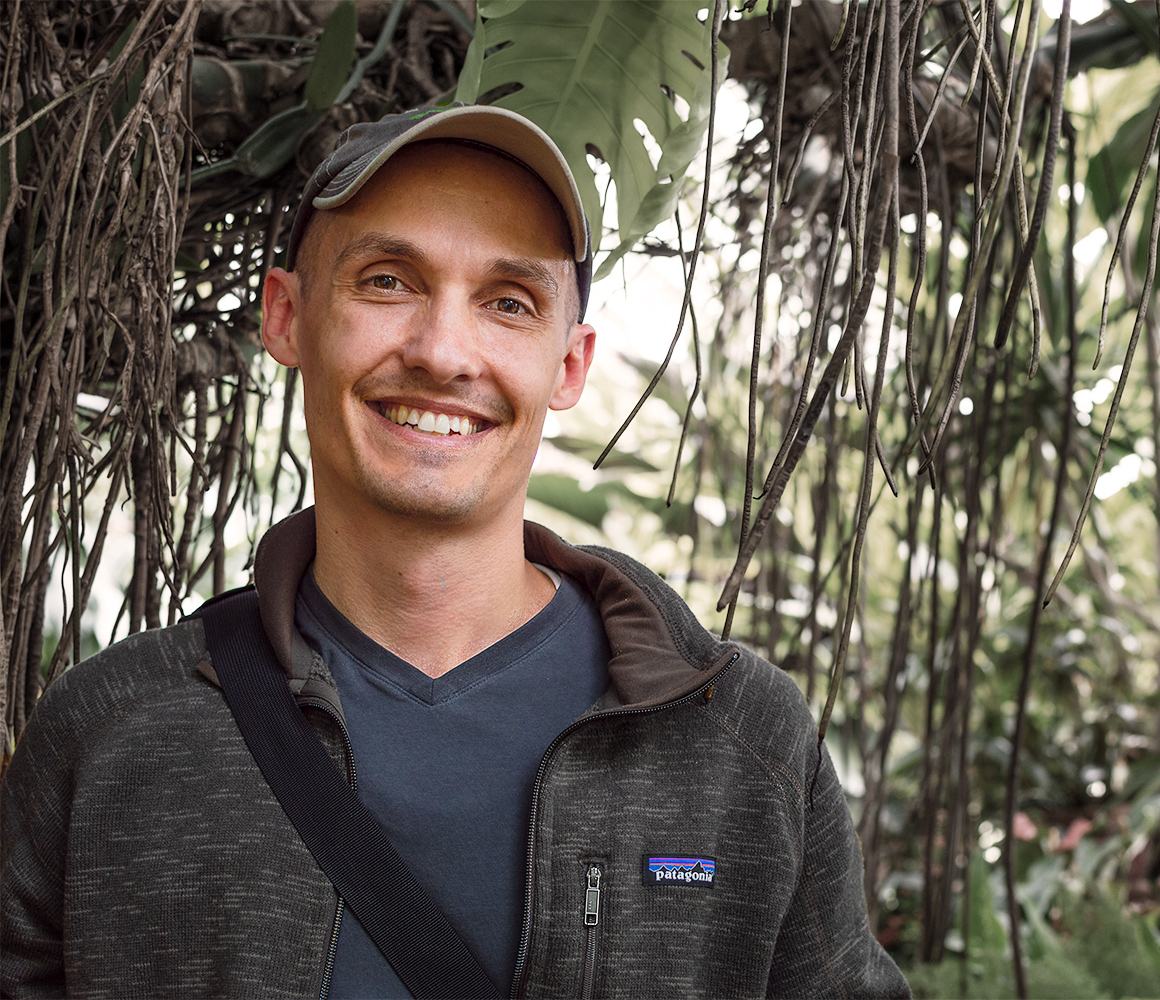 Speaker: Jacob Sorber, Professor & Computer Science Division Chair, School of Computing, Clemson University
Abstract: Batteryless computing has grown in recent years, with new devices, new applications, and improvements efficiency and ease of use; however, batteryless systems research is still challenging. And, it might not have to be. We depend on custom hardware platforms, fragmented software stacks, ad hoc evaluation methods, and experimental setups that are often difficult to reproduce. These challenges create barriers to entry, slow collaboration, and make it harder for the community to build upon prior work. This discussion will explore how the batteryless computing research community can grow through better shared infrastructure: accessible tools, standardized interfaces and benchmarks, reproducible workflows, and open experimentation platforms. I will describe the progress, goals, and plans for Cicada, an NSF-funded community infrastructure project aimed at addressing these challenges, with group discussion throughout. I don’t have all the answers, but I hope we (as a community) have some that will lower barriers, accelerate innovation, improve reproducibility, and help batteryless computing grow into a more mature and sustainable research ecosystem.
Biography: Jacob Sorber is an Associate Professor in the School of Computing at Clemson University, where he leads the PERSIST Research Lab. His research focuses on embedded systems, mobile sensors, wearables, batteryless and intermittent computing, and low-power system design. He has contributed to the development of hardware and software techniques that enable small computing devices to adapt to changing conditions, recover from frequent power failures, and operate maintenance-free for long periods.